Gita Govinda — Lalita Kapilavai — Traditional Artist
© Lalita Kapilavai — Traditional Artist. Digital Atelier & Cultural Archive. Digital reproduction, automated screen captures, and unauthorized printings are strictly prohibited.
Gita Govinda
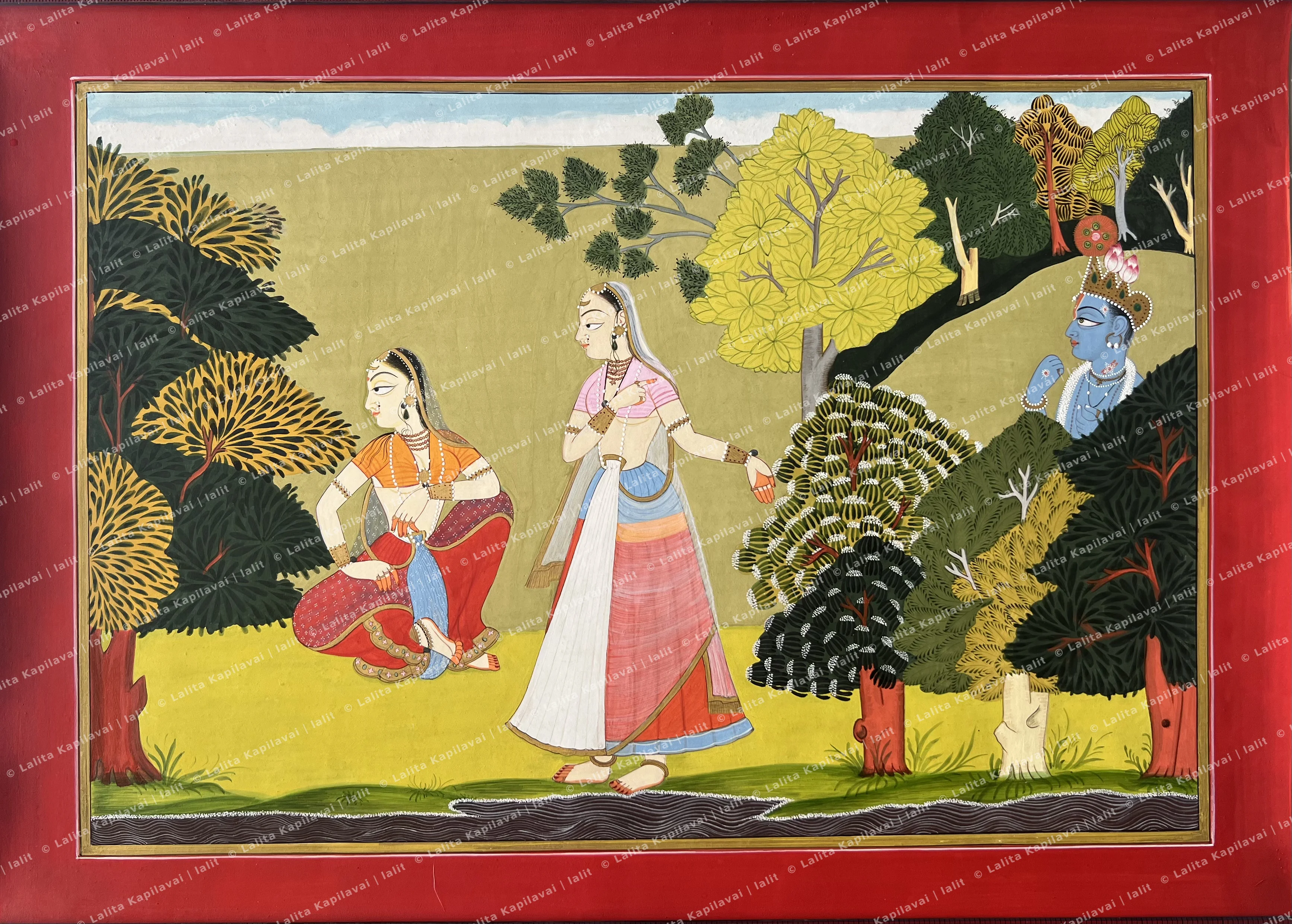
Natural pigments, shell gold and shell silver on Wasli paper • L= 36cms; W= 24.5cms
Gita Govinda
Iconographic Commentary & Symbolism
Gita Govinda is a poetic composition based on Shringara rasa (erotic sentiment) by the poet Jayadeva of 11th century that inspired many artists of the times. This work borrowed some features from its precursor, the Basohli school, like lotus-shaped wide-opened eyes, garments, beetle wings, the lotus-studded crown of Krishna and his Vanamala. The composition is rendered akin to Basohli in terms of thin strips of sky above and a body of water below, a flat background of colour against rows of a huge variety of highly stylised trees to visualise simultaneous events happening according to the poetic description.
Based on Jayadeva's Gita Govinda, this painting depicts the love play between Krishna and his counterpart Radha. Here, Radha’s friend is shown encouraging her for union with Krishna in the grove. Thus, she addresses Radha:
“O friend, Krishna, who speaks flattering words and who falls at your feet, has arrived at the bed made in the grove and is waiting for you. Therefore, do not delay and engage in amorous play with Krishna.” This Basohli painting is done in the school of artist Manaku, who had flourished in Basohli in circa 1730.

Scan in physical gallery or exhibition floor for curatorial provenance.